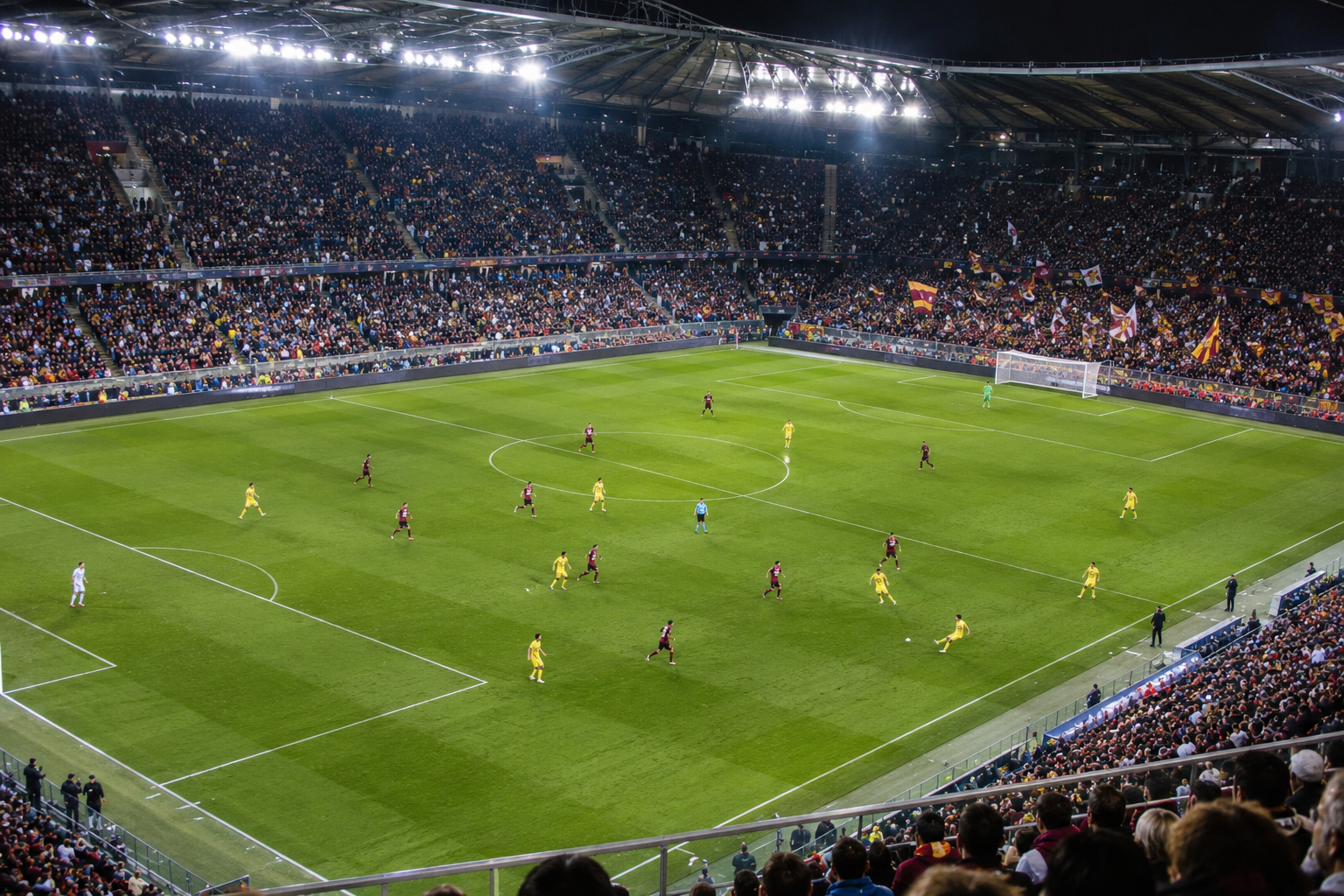
European football is more than a collection of domestic leagues and international competitions. It is a connected sporting environment in which clubs, players, coaches and supporters influence one another across borders. A tactical innovation introduced by one team can inspire rivals elsewhere, while a transfer can bring together football traditions that developed in completely different circumstances. Following European football news helps supporters understand these connections and see how individual results fit into the wider picture of the continental game.
From historic stadiums and intense local rivalries to ambitious emerging projects, European football offers an extraordinary range of stories. Its appeal comes partly from this diversity: every league has its own character, yet all are linked by shared competitions, professional standards and the constant pursuit of sporting success.
Domestic Leagues as the Foundation of European Football
National championships remain the heartbeat of the European club game. They provide the regular competition through which teams establish their identity, develop players and build relationships with their communities. Although the general structure of a league may appear familiar from one country to another, the experience of following each competition can be remarkably different.
The English Premier League is widely associated with its intense pace, physical demands and unpredictable match situations. Spain’s top division has a long tradition of technical football, positional awareness and tactical detail. Italian football is closely connected with defensive organisation and strategic discipline, although modern teams increasingly combine those qualities with aggressive attacking approaches. Germany’s Bundesliga has developed a reputation for energetic pressing, quick transitions and strong supporter culture, while French football continues to attract attention for its ability to produce technically gifted young players.
These descriptions are broad rather than absolute. Every championship contains clubs with contrasting philosophies, and individual managers can challenge established conventions. Nevertheless, national football environments influence how teams approach recruitment, coaching and match preparation.
Domestic leagues also create the conditions for long-term rivalries. A title race is not simply a competition between the strongest squads. It is shaped by historical expectations, financial resources, managerial stability and the ability to maintain consistency over an entire campaign. A club that performs impressively for several weeks may still face difficulties when injuries, fixture congestion or changes in form begin to test its depth.
Continental Competitions Bring Different Football Cultures Together
European club tournaments add another dimension to the season. They bring together teams that rarely meet in domestic competition, creating encounters between different tactical systems, sporting traditions and approaches to preparation.
The UEFA Champions League occupies a particularly prominent position in this landscape. For many clubs, participation represents the culmination of years of investment and sporting development. It gives established teams an opportunity to measure themselves against elite opposition, while newcomers can use the competition to establish a reputation beyond their domestic borders.
The Europa League and Conference League provide additional opportunities for clubs with different resources and ambitions. These tournaments can be especially important for teams seeking international experience, greater visibility and a chance to test the progress of their sporting projects.
Continental football also challenges the idea that success at home automatically translates into success abroad. A team accustomed to controlling possession in its domestic league may encounter an opponent that presses more aggressively or defends in a compact formation. Another club might struggle with the intensity of travelling, unfamiliar stadium conditions or the need to manage a demanding schedule across several competitions.
These differences make European tournaments valuable not only as sporting events but also as tests of adaptability. The ability to adjust a game plan without losing a team’s identity is often one of the qualities that separates consistent contenders from occasional surprises.
The Tactical Exchange Between National Football Schools
One of the most interesting features of modern European football is the constant exchange of ideas. Coaching methods no longer remain confined to the countries where they first became popular. Managers move between leagues, analysts share research, and clubs study opponents across several competitions.
Pressing provides a useful example. High-intensity pressure has become an important element of many teams’ strategies, but its implementation varies. Some sides attempt to recover possession immediately after losing the ball, while others prefer to guide opponents towards specific areas before applying pressure. The effectiveness of either approach depends on player fitness, positional discipline and the ability to recognise when the team should retreat.
Possession football has also evolved. Keeping the ball is no longer necessarily an objective in itself. Coaches increasingly use controlled possession to manipulate defensive structures, create passing lanes and move opponents away from dangerous central areas. A team may circulate the ball patiently before accelerating through a narrow space, or deliberately draw pressure towards one flank to open the opposite side.
These tactical developments are visible across European competitions, although they rarely produce identical teams. Clubs adapt ideas to the abilities of their players and the expectations of their supporters. A system that works for a technically gifted squad may be less effective for a team built around speed, physical strength and direct attacking transitions.
Transfers Connect Clubs, Markets and Sporting Ambitions
The transfer market is another force linking European football. Player movement can transform a team’s style, strengthen a weak position or create opportunities for younger members of the squad. It can also reveal how clubs view their future.
Recruitment is increasingly influenced by detailed performance analysis. Scouts and sporting departments examine more than goals, assists or appearances. They may evaluate a player’s ability to receive the ball under pressure, contribute to defensive transitions, occupy different positions or maintain performance levels across a demanding schedule.
The importance of these qualities varies according to the club’s requirements. A team that plays with an advanced defensive line may prioritise pace and anticipation in central defenders. A side that relies on possession could look for midfielders with excellent awareness and passing range. Clubs operating with limited budgets may focus on players who offer potential development rather than immediate recognition.
Transfers also create new cultural connections. A footballer moving from one national championship to another must adapt to different tactical expectations, training routines and public pressure. Even players with considerable experience can require time to understand the rhythm of a new competition.
For supporters, these movements generate excitement but also uncertainty. A high-profile signing does not guarantee success, just as an unfamiliar player can become an important figure after receiving the right opportunities. The real impact of recruitment is usually clearer only after the new team has faced a range of opponents and difficult match situations.
The Importance of Developing the Next Generation
European football’s future depends heavily on youth development. Academies provide clubs with a way to cultivate technical ability, tactical understanding and professional discipline from an early age. They can also help establish a recognisable playing philosophy that continues through different generations of players.
The strongest development systems do more than teach young footballers how to perform individual skills. They introduce decision-making under pressure, positional awareness and an understanding of collective responsibilities. Players must learn when to keep possession, when to take risks and how to respond when an opponent changes its approach.
The transition from academy football to senior competition remains one of the most demanding stages of a player’s career. Young prospects may dominate at youth level but discover that professional matches require greater physical resilience and faster decision-making. Regular opportunities, experienced teammates and carefully planned development pathways can make a significant difference.
Clubs also face a difficult balance between giving young players meaningful minutes and protecting them from excessive expectations. Supporters often become excited about emerging talent, but development rarely follows a perfectly predictable path. Some players progress rapidly, while others need additional time or a change of environment before reaching their potential.
Supporters Give European Football Its Distinctive Character
The identity of European football cannot be explained through tactics and transfers alone. Supporters remain central to the atmosphere surrounding the sport. Stadium traditions, local rivalries, songs and matchday rituals help distinguish one club from another, even when teams compete within the same national system.
For many fans, supporting a club is connected to family history and community identity. The relationship can extend across generations, with important matches becoming shared memories. A derby victory may carry emotional significance that goes far beyond its effect on the league table.
The experience of following football has also become more international. Digital platforms allow supporters to keep track of clubs in different countries, discuss tactical developments and follow players who previously received limited attention outside their domestic competitions. This wider audience does not necessarily weaken local traditions. In many cases, it introduces new supporters to the history and culture behind established rivalries.
At the same time, clubs must manage the relationship between their traditional communities and their growing international profiles. Commercial expansion can create new opportunities, but supporters often expect organisations to preserve the qualities that made them distinctive in the first place. The challenge is to develop globally without losing a meaningful connection with the people who support the club every week.
Following the Stories Behind the Results
A football result provides an immediate answer to one question: which team performed better on the day? It does not necessarily explain why the match developed as it did or what the outcome might mean for the weeks ahead.
A narrow victory could reveal defensive resilience, but it might also expose a lack of attacking efficiency. A heavy defeat may indicate tactical problems, although injuries or an unusual sequence of mistakes can contribute to the final score. Looking at the broader circumstances helps supporters avoid drawing conclusions from a single performance.
The most informative football coverage connects match reports with analysis of managerial decisions, player development, club planning and competition dynamics. These subjects are closely related. A change in formation may reflect the arrival of a new midfielder, while a transfer decision could be influenced by the club’s ambitions in domestic and continental tournaments.
This wider perspective is particularly useful during periods when several competitions overlap. Clubs must manage league fixtures, cup matches and international commitments while maintaining fitness and concentration. Squad rotation becomes a strategic necessity, and the decisions made by coaches can influence results long after a particular match has finished.
A Football Landscape That Never Stands Still
European football continues to evolve because its different parts are constantly interacting. Domestic leagues preserve local identities, continental tournaments encourage competition between national football cultures, and the transfer market moves talent and ideas across borders. Supporters, meanwhile, give the sport its emotional continuity.
No single championship represents the entire European game. Its character emerges from the contrast between different approaches, the ambitions of clubs at different stages of development and the stories that unfold throughout each season. That is what makes the continental football calendar so compelling: even familiar competitions can produce new tactical questions, unexpected breakthroughs and rivalries that take on fresh meaning.
Following these developments closely allows supporters to appreciate more than the final score. It reveals how the sport changes, how clubs respond to new challenges and how one match can influence a much larger story. European football remains a shared landscape, but its richness comes from the many distinct identities that continue to shape it.